Nashville, TN · Garage Door Service
Broken or frayed garage door cables in Nashville homes built 1953-2012. What causes it, what it runs, and why DIY fixes rarely hold through a Tennessee winter.
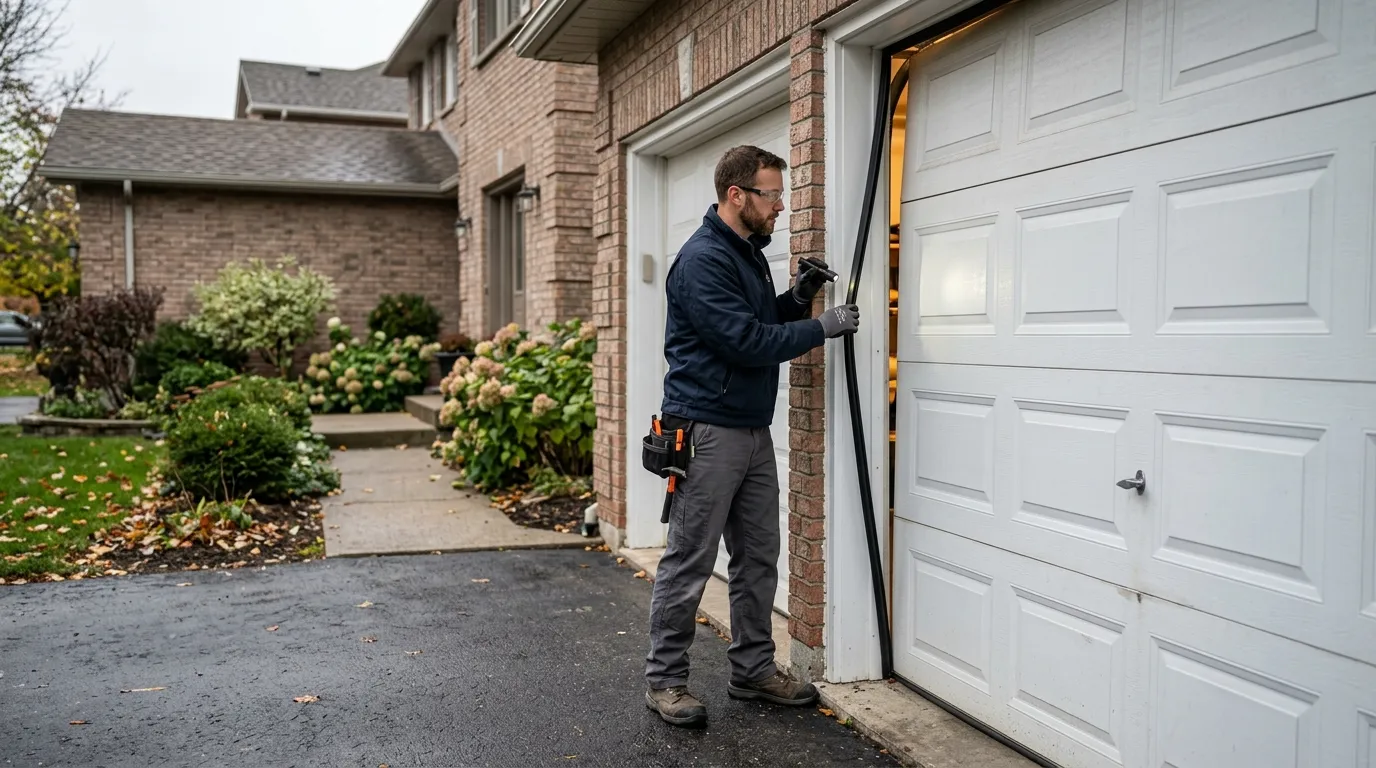
A cable problem usually shows up as a door that hangs crooked on one side, drops fast the last foot before it hits the slab, or makes a snapping sound followed by the door refusing to move at all. Sometimes you'll see the actual cable frayed at the drum, strands sticking out like a broken bicycle brake line. Other times the cable looks fine but has jumped off the drum and is bunched up, which binds the door in the track and can bend a panel if someone tries to force it with the opener.
Across the Nashville service area, most of the housing stock was built between 1953 and 2012, with a median build year around 1990. That's a long enough window that we see two different cable failure patterns depending on the house: older torsion setups where the cable and drum assembly has simply worn out after decades of cycles, and newer extension-spring systems from the 1980s-90s boom where the cable was undersized for a heavier insulated door someone added later. Both fail the same way in the end - a snapped or frayed cable that leaves the door unsupported on one side.
We're not going to put a number here that isn't backed by a rate sheet, so instead here's what actually drives the cost on a cable job. A single frayed cable on a torsion system is usually the simplest call - one cable, one drum check, done. If the cable snapped because a spring failed first (common, since a broken spring lets the door slam and the sudden load can shear a worn cable), you're paying for both parts and more labor time, not just the cable.
Age of the drum and track matters too. On a house from the 1990s median build year we mentioned, the drum and bearing plate are often original, and if one of those is worn out of round, replacing just the cable doesn't fix the underlying problem - it just buys a few more months before it happens again. We'll tell you straight if that's the case instead of quoting a cable-only fix that won't hold.
Door size and cable gauge factor in as well. A double-wide door carries more static load per cable than a single, so the parts cost more and the job takes longer to balance correctly once the new cable is on.
A garage door under tension is not a safe DIY repair, and cables are the part most likely to hurt someone. A torsion spring holds enough stored energy to snap a cable trying to release it, and an extension spring cable under load can whip if it comes loose while you're working near it. If the door is currently stuck halfway open because a cable jumped the drum, do not put your hands or a pry bar near the drum assembly - leave the door where it is and call.
There is one thing you can safely do yourself: look. Check whether the cable is visibly frayed or has come off the drum, note which side, and see if the door is sitting level or canted. That information helps whoever comes out get the right part on the truck the first trip instead of a second visit. Beyond that, resist the urge to loosen bolts or cut a hanging cable - it's under more tension than it looks.
Cable wear isn't random - it's mechanical fatigue plus climate, and both point at Nashville's specific conditions. The service area sits in a moderate-cold climate band, which means real freeze-thaw swings through winter rather than a single deep freeze. That cycling stiffens grease on the drum and cable, adds friction to every open-close cycle, and accelerates fraying at the point where the cable wraps the drum - especially on doors that have run for years without relubrication.
Housing age compounds it. With most homes in the service area's 14 named communities built across a long 1953-2012 span and a median year around 1990, a large share of doors are old enough that the original cable has simply outlived its rated cycle count. Across roughly 36,280 owner-occupied houses in the area, that adds up to a lot of original hardware still in service. None of this is a Nashville-specific defect - it's what happens when a wear part reaches the end of its life in a climate that adds extra stress to it, and it's why a cable that looks fine in July can snap in January.
No. If a cable has snapped, the door is only being held by whatever's left - the other cable, a stuck roller, or nothing. Forcing it open with the opener or by hand risks the door coming down unevenly or falling. Leave it where it is and call for the door to be secured before anyone tries to move it.
Cable jobs are generally quick once someone's on site, since it's a single part swap with a balance check after. We don't quote exact time windows here since that depends on the door and what else the tech finds, but it's typically one visit, not multiple trips.
Cold makes lubricant on the drum and cable stiffen, which adds friction to every cycle and speeds up fraying at the wrap point. A cable already near the end of its life often lets go during a cold stretch that would have caused no trouble in summer.
By Neighborhood
We also handle cable repair in these Nashville-area suburbs.
Call now or request a free quote - same-day service on most repairs, upfront written pricing.