Nashville, TN · Garage Door Service
Forest Hills homes date mostly to 1970, older than the Nashville-area norm. We service the extension-spring and early sectional hardware that era left behind.
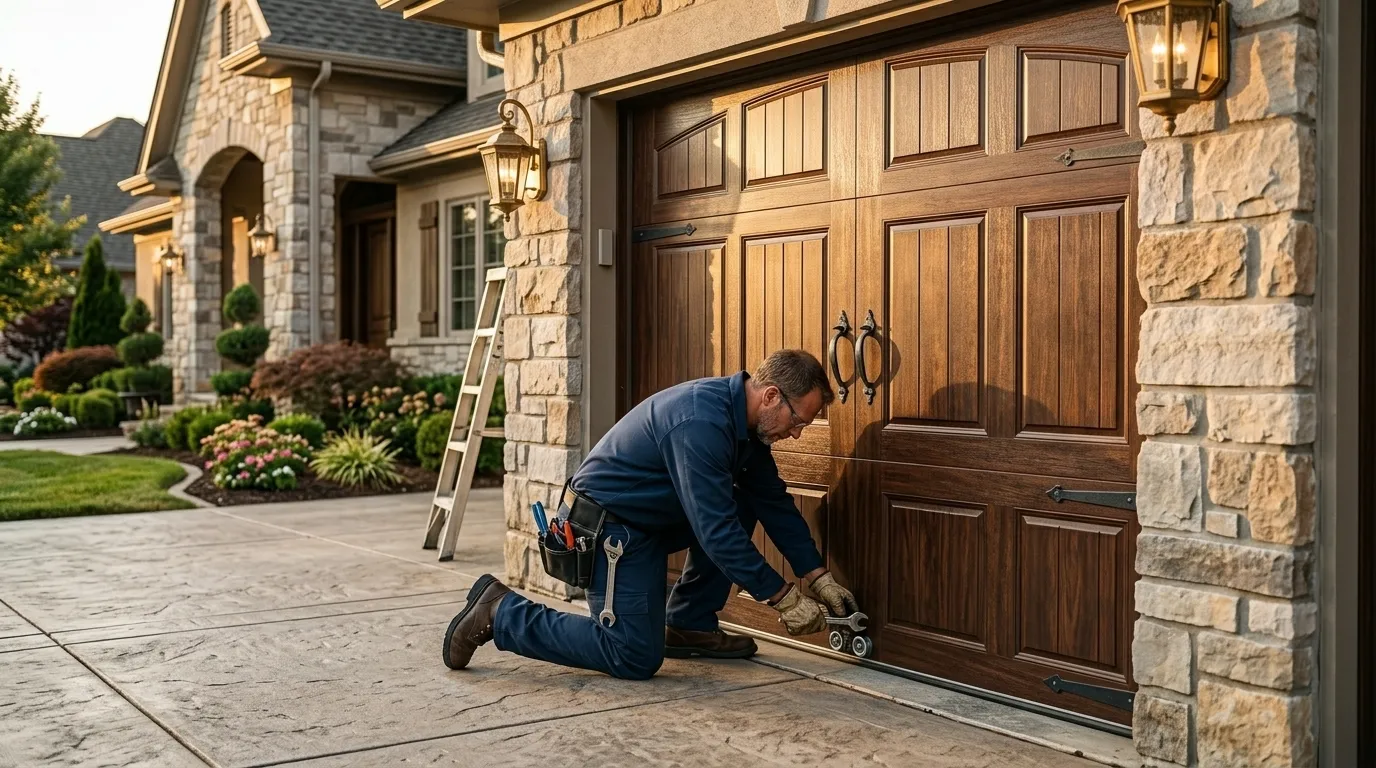
The call we get most from Forest Hills is a door that slams down the last foot of travel, or one that won't stay up past waist height without a hand on it. That's a spring giving out, and in this part of the service area it's usually an extension spring stretched along the horizontal track, not the torsion bar you'd expect on a newer build.
That matters because Forest Hills' housing stock centers on a median build year of 1970, well ahead of the 1990 median across the wider service area we cover from Nashville. A house built in 1970 got whatever door and hardware combination was standard that year, and a lot of those doors are still hanging on their original springs and brackets fifty-plus years later. The failure looks the same as any other worn spring - a door that drops fast or fights you on the way up - but the parts behind it, and the way they're mounted, are older than what we pull off a 1990s build across town.
Extension springs are the ones that hurt people. They run in tension along the horizontal tracks above the door, and when one lets go it can whip a safety cable, or the spring itself, across the garage. If you've got an older door here and you're hearing a bang or seeing a gap in the coil, don't reach up and unhook anything.
What you can check safely: the door balance. Disconnect the opener, lift the door by hand to waist height, let go. If it holds, the springs are doing their job. If it drops, that's your answer, and it's not a DIY spring swap - the winding bars and unloading process on an old extension setup have hurt plenty of confident homeowners. Lubricating hinges and rollers, tightening loose lag bolts on the track brackets, and clearing the photo-eye sensors are all fine to do yourself. Springs, cables, and anything under tension - call it in.
Because so much of Forest Hills was built around 1970, we carry extension springs and the older-style track hardware sized for that generation of door, not just the torsion bar stock that fits a 1990s garage. The two setups aren't interchangeable, and showing up with the wrong spring means a second trip.
We also carry rollers and cable in the older diameters that a lot of these original doors still use, since track widths and drum sizes shifted over the decades. On a house this age, the opener itself is often a later add-on - not original to 1970, since chain-drive residential openers didn't get common until later - so we treat the opener as a separate diagnosis from the door and spring hardware. One limitation worth saying plainly: if a door's track is bent or the panels have rusted through, we're not going to spend an afternoon forcing fifty-year-old hardware to behave. At that point replacement is the honest answer, not another patch.
We run out of Nashville, about seven miles to Forest Hills, so there's drive time built into any visit - we don't pretend otherwise. On site, the first thing we check on an older door is which spring system it actually has, because guessing wrong wastes the trip.
Given the income profile out here, a lot of homeowners choose to replace the whole door and hardware set rather than keep repairing fifty-year-old parts piecemeal, and we'll give you that option straight alongside the repair price rather than push one or the other. For a repair, we match the spring and cable to what's already on the track rather than swapping in a torsion conversion unless you ask for one - that's a bigger job with different brackets and headroom requirements. Either way, the door gets balanced and tested by hand before we call it done, same as any door regardless of its age.
It comes down to build year. Forest Hills' housing runs older on average than a lot of the Nashville service area - median around 1970 - and doors from that era typically used extension springs mounted along the horizontal track instead of the torsion bar spring you'd find on a garage built in the 1990s or later.
If the track is straight and the panels are solid, a spring or cable repair is usually cheaper and worth doing. If the track's bent, panels have rusted, or the door's been patched more than once already, replacement tends to make more sense long-term - we'll tell you which one we're looking at on site.
About seven miles. We work out of Nashville and travel to Forest Hills for service calls - there's no local branch here, just a short drive built into the visit.
We'd say no. Extension springs run under tension along the track, and releasing or winding one without the right bars and technique has hurt people who were confident they could handle it. Balance checks and basic lubrication are fine DIY; springs and cables aren't.
Call now or request a free quote - same-day service on most repairs, upfront written pricing.