Nashville, TN · Garage Door Service
La Vergne's 12,880 households sit on housing built mostly since 2000, so the failures we see are opener and sensor faults, not the old torsion hardware we find in older Nashville-area stock.
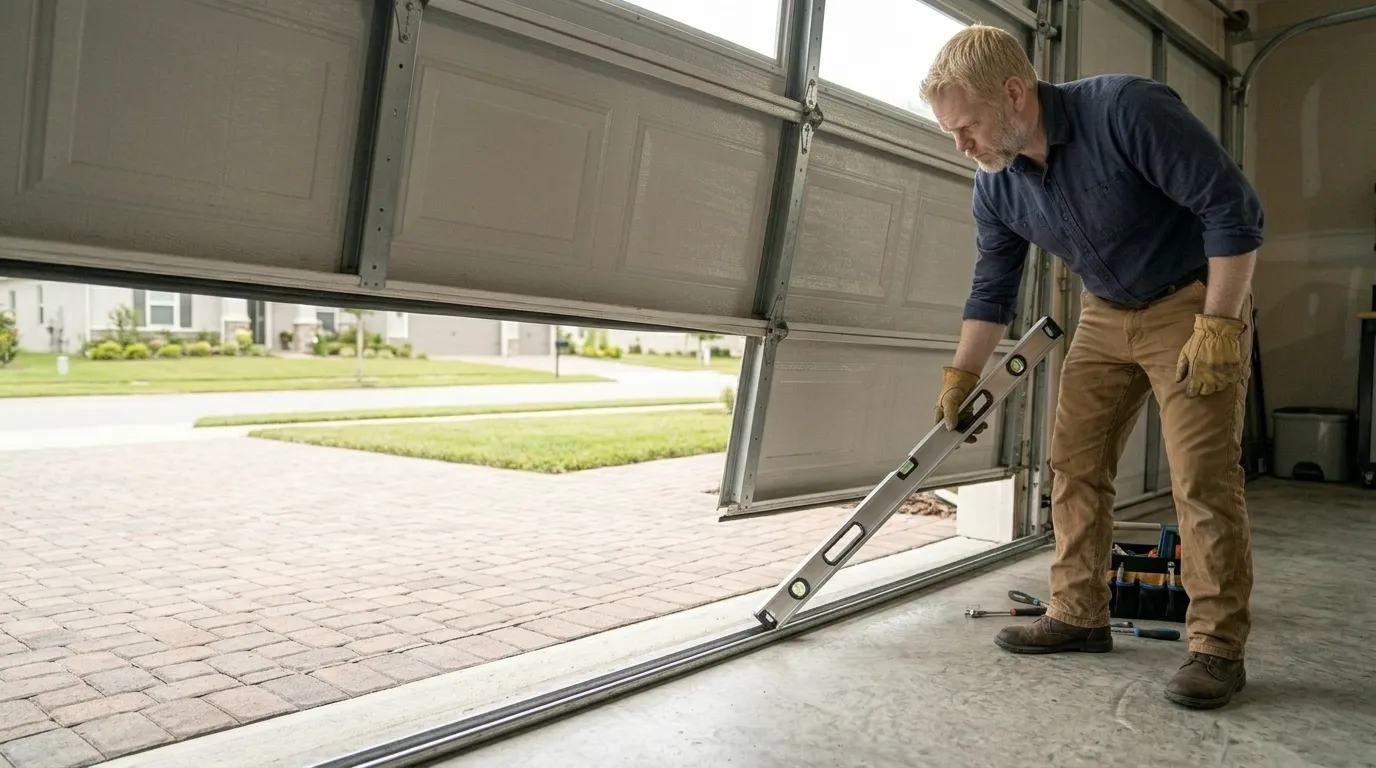
La Vergne is a smaller town by household count than a lot of what we cover - about 12,880 households - which means fewer garage doors overall, but also fewer of the oddball setups we run into in older parts of the service area. Most houses here went up around 2000 or later, so what you're working on is likely a standard steel sectional door on a factory opener bracket, not a hand-built wood door on ancient hardware.
That's good news if you're the type to try a fix yourself. A dead remote battery, a sensor knocked out of alignment by a bike or a stray box, or a track bolt that's worked loose over twenty-some years - those are things you can check without tools beyond a screwdriver. Clean the photo-eye lenses, check they're both lit solid rather than blinking, and make sure nothing's blocking the door's path.
What you shouldn't touch: the torsion spring itself, or anything under tension. Even on newer doors like the ones common in La Vergne, that spring stores enough force to break a wrist. If the door won't budge, or one side lifts faster than the other, stop and call it in rather than forcing it.
We come out from Nashville - La Vergne runs about 16 miles from our base, so we plan the truck's route with that drive built in rather than treating it as a same-block call. On site, we start with a full cycle test: open, close, watch the travel, listen for the grind or the hitch that tells us where the fault actually lives, rather than guessing from what the homeowner describes over the phone.
On a house built in the 2000s range, which describes a good share of La Vergne, we're usually looking at opener logic boards, drive belt or chain wear, worn nylon rollers, or a spring that's simply reached the end of its cycle count rather than failed from age-related rust the way older doors do. We test the balance with the opener disconnected, check cable tension, and only then decide whether it's a spring swap, a roller set, or an opener board.
We carry the common torsion spring sizes and roller types that fit this era of door on the truck, so most jobs close out in one visit without a second trip for parts.
The mistake we see most on newer-build doors like the ones common in La Vergne is homeowners assuming a noisy or slow door means the opener is dying, when it's actually a roller or a hinge that's dry and binding. Swapping an opener that isn't broken costs real money and doesn't fix the noise.
The other one: a cable that's started to fray gets ignored because the door still opens fine - until the day it doesn't, usually mid-cycle with the door half up. On a 2000s-era door under normal spring tension, a snapped cable can drop that door fast. If you see fraying, strands sticking out, or rust on the cable near the drum, that's a call-it-in issue, not a wait-and-see one.
We'll also say plainly: if the opener logic board is the actual fault on an older unit and the part's been discontinued, replacement can end up cheaper and faster than sourcing a board nobody stocks. We'll tell you straight which way the math goes before we start.
Housing in La Vergne mostly dates from 2000 onward, which puts it at the newer end of what we see across the wider service area - areas with stock going back to 1953 carry a different set of failures entirely, mostly rust and warped wood panels. Here, the doors are steel, the openers are chain or belt drive with circuit boards rather than pure mechanical relay units, and the failures track more with usage cycles and wear parts than with age-driven decay.
Cold-weather swings still matter. This region sits in a moderate cold climate band, and a door that's balanced fine in October can bind in a hard freeze because the grease in the rollers and hinges stiffens up. On a door this age, that shows up as a slow open rather than a full stop - the opener strains against resistance it wasn't calibrated for.
With median household income in La Vergne around $80,418, we find owners here are as likely to ask us to fix a part as to replace the whole unit, and on doors this young, fixing the specific part is usually the right call rather than a full swap.
For La Vergne calls we keep the parts that match 2000s-era sectional doors on the truck: standard torsion springs sized for a two-car door, nylon rollers, drive belts and chains for the common opener brands from that build era, and photo-eye sensor pairs. Cable sets and standard hinges round that out.
What we don't carry as stock is anything specific to hand-built or discontinued opener models - if a house here happens to have an older or unusual setup, that part may need ordering, and we'll say so on the visit rather than promise a same-day fix we can't back up. Most La Vergne jobs, given the housing age here, don't run into that problem.
About 16 miles from our base in Nashville. We factor that drive into scheduling rather than treating it as a quick local hop, so we plan the visit with enough time on the job itself once we arrive.
Yes. Most La Vergne housing dates from 2000 or later, so we're usually dealing with opener boards, belts, and roller wear rather than the rusted torsion hardware and warped wood panels common on older stock elsewhere in the service area.
Check the rollers and hinges for dryness first, especially after a cold snap, since stiff grease slows the door without breaking anything. If the door still opens unevenly or grinds, that's a job for a call rather than more troubleshooting.
On a door built in the 2000s range, usually not - the failure is more often a belt, roller, or sensor than the opener unit itself. We'll test each part before recommending a full swap, since most La Vergne homes have younger doors where a specific fix makes more sense.
Call now or request a free quote - same-day service on most repairs, upfront written pricing.