Nashville, TN · Garage Door Service
Garage door repair for La Vergne, TN homes built mostly around 2000 - spring, opener, and track work priced against this town's own numbers, not Nashville's.
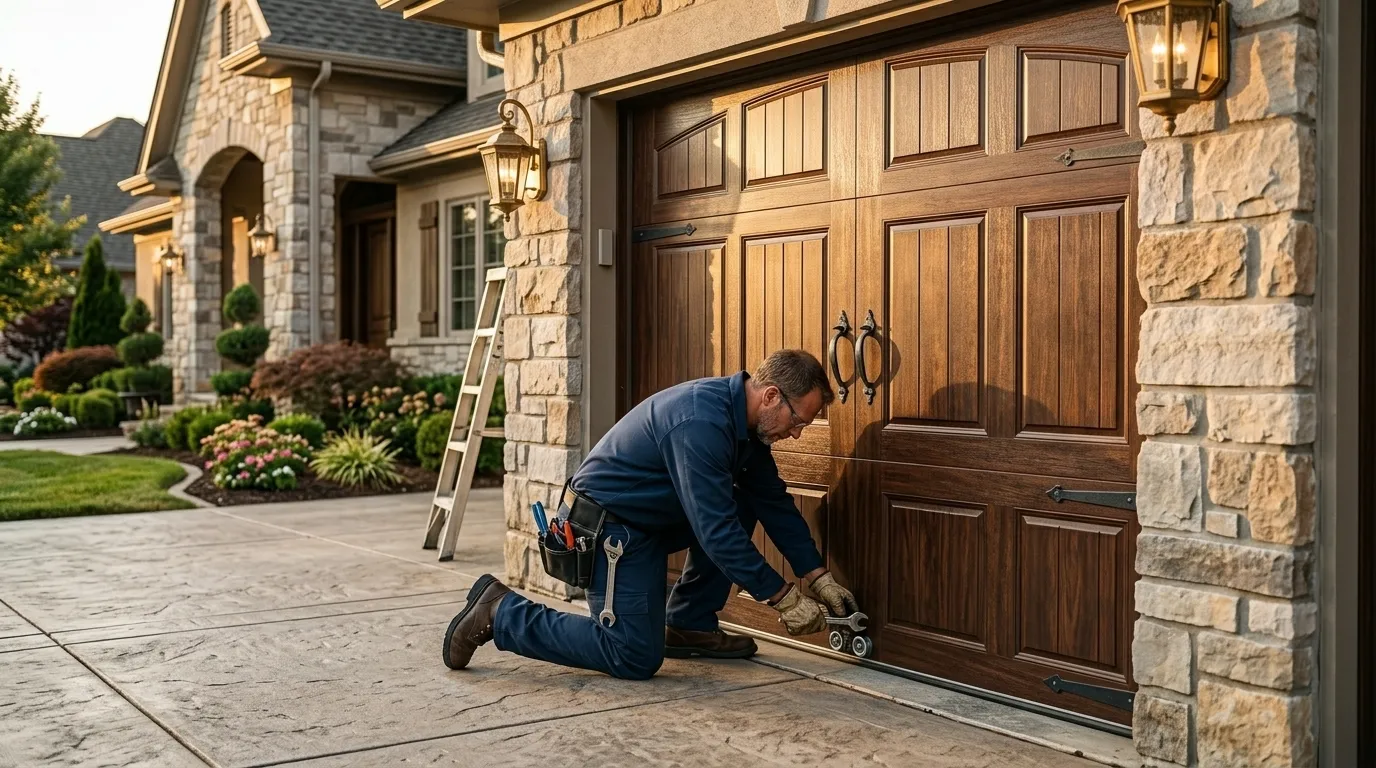
La Vergne's median household income sits at $80,418, which is well below the $93,223 average across the rest of the service area. That gap matters for one reason: it's usually cheaper to fix a door here than to replace it, right up until the day it isn't. A single broken torsion spring, a bent bottom bracket, or a worn roller on a door from around 2000 is almost always a repair, not a teardown.
Where homeowners get in trouble is the spring itself. Torsion springs live under enough wind-up tension to break a wrist or a jaw, and YouTube doesn't show you the winding bars snapping loose. If your door came off its track, if a cable frayed, or if the opener is grinding but the door won't move, that's a call, not a Saturday project. Swapping a broken hinge or tightening loose track bolts, on the other hand, is well within reach for most owners with basic tools.
The honest line: if you're not sure whether a job is spring-related, assume it is. Springs are the one part on a garage door that punish guessing.
We come out from Nashville, about 16 miles in, so we're not walking a job cold - we already know most of La Vergne's stock dates to a builder wave around 2000, and we bring parts that match that generation of hardware rather than guessing on site. First step is always diagnosis: is the spring undersized for the door weight, is the opener's gear stripped, is the track out of plumb. Springs get replaced in matched pairs on double doors, never one at a time, because a mismatched pair just shifts the load and breaks the new one early.
On openers, we check the logic board and the drive gear before we recommend a full swap. A lot of "dead" openers from this era are just a burnt capacitor or a stripped gear, both cheap fixes next to a full unit replacement. Track and roller work is more mechanical: we re-square the track, replace worn rollers with steel ball-bearing ones, and check the cable drums for wear.
We don't stock a local yard here - every job runs off the truck we bring from Nashville, which means we plan around what a 2000-era door in this town typically needs before we ever pull into the driveway.
The most common mistake is treating a noisy door as a lubrication problem when it's actually a spring losing tension. WD-40 quiets a squeak for a week and hides the real issue, which is a spring that's slowly stretching out of spec. By the time the door won't stay up on its own, the spring has usually been failing for months.
The second way this goes sideways is opener-side: homeowners replace a dead opener without checking whether the door itself is out of balance. An opener fighting an unbalanced door burns out its gear in a fraction of the normal life, so you end up buying the same part twice. We always check door balance before touching the opener, and if the door doesn't hold position halfway open with the opener disconnected, the spring is the actual problem.
Third, and this one's on us to be honest about: parts for niche opener models from this build era sometimes take longer to source than a same-week job. If your unit is an odd model, we'll tell you the lead time up front rather than promise a date we can't hit.
La Vergne's housing stock clusters tightly around a build year of 2000, and 12,880 households means a lot of those doors and openers came off the same builder specs at roughly the same time. That's not a coincidence you see in older, more mixed-era towns - it means failures here tend to bunch up. When one spring on a 2000-built door in this town gives out, it's a decent bet the neighbor's is close behind, because they were sized and installed the same way.
The climate band this area sits in is cold-moderate, not the deep-freeze extremes some regions get, but enough seasonal swing that steel torsion springs cycle through real temperature change every year. Springs that were fine for the first fifteen years start showing metal fatigue right around the twenty-year mark, which is exactly where a lot of La Vergne's stock is sitting right now.
Put those two together - a concentrated build year and a climate that stresses steel over time - and you get a town where a specific generation of hardware is aging out at close to the same pace across the whole area, rather than the scattered, one-off failures you'd expect somewhere with a wider mix of build decades.
Because so much of La Vergne dates to right around 2000, our truck carries torsion springs sized for that generation's standard door weights, along with the ball-bearing rollers and lift cables that tend to wear out on doors of that age. Bottom brackets and center hinges from that era are a common failure point too, and those ride on the truck as standard stock, not special-order.
Opener parts are more of a mixed bag. Drive gears and logic boards for common builder-grade units from around 2000 are usually on hand. Less common models, especially ones that were already being phased out by manufacturers back then, sometimes need to be ordered in, and we'll say so plainly rather than stall a job pretending we have it on the shelf.
We don't keep a depot in La Vergne itself - the truck comes from Nashville, 16 miles out, stocked ahead of time based on what this town's housing era actually needs. That planning is the difference between a same-visit fix and a second trip, and we'd rather tell you which one you're getting before we start.
Usually not, at the income level typical for this town. A spring, cable, or roller repair on a 2000-era door runs a fraction of a full replacement, and most of these doors have plenty of life left in the panel and track. Replacement makes sense mainly when the opener and springs are both failing at once, or the door itself is physically bent.
Builder-grade openers installed during La Vergne's main construction wave are now past the 20-year mark, which is close to the end of normal service life for the gear and logic board. Add a door that's slightly out of balance, and the opener motor works harder than it should, shortening its life further.
No. We run out of Nashville, about 16 miles from La Vergne, and we bring a truck stocked for this town's typical build era rather than keeping a local yard here.
Disconnect the opener and lift the door by hand halfway. If it doesn't hold position on its own, the spring has lost tension and that's the problem, not the opener. An opener straining against a bad spring will fail early too, so fixing the spring first is usually the right order.
Call now or request a free quote - same-day service on most repairs, upfront written pricing.