Nashville, TN · Garage Door Service
Mount Juliet homes mostly went up after 2000 - newer doors, different failures than older Nashville stock. We drive out from Nashville to fix them right.
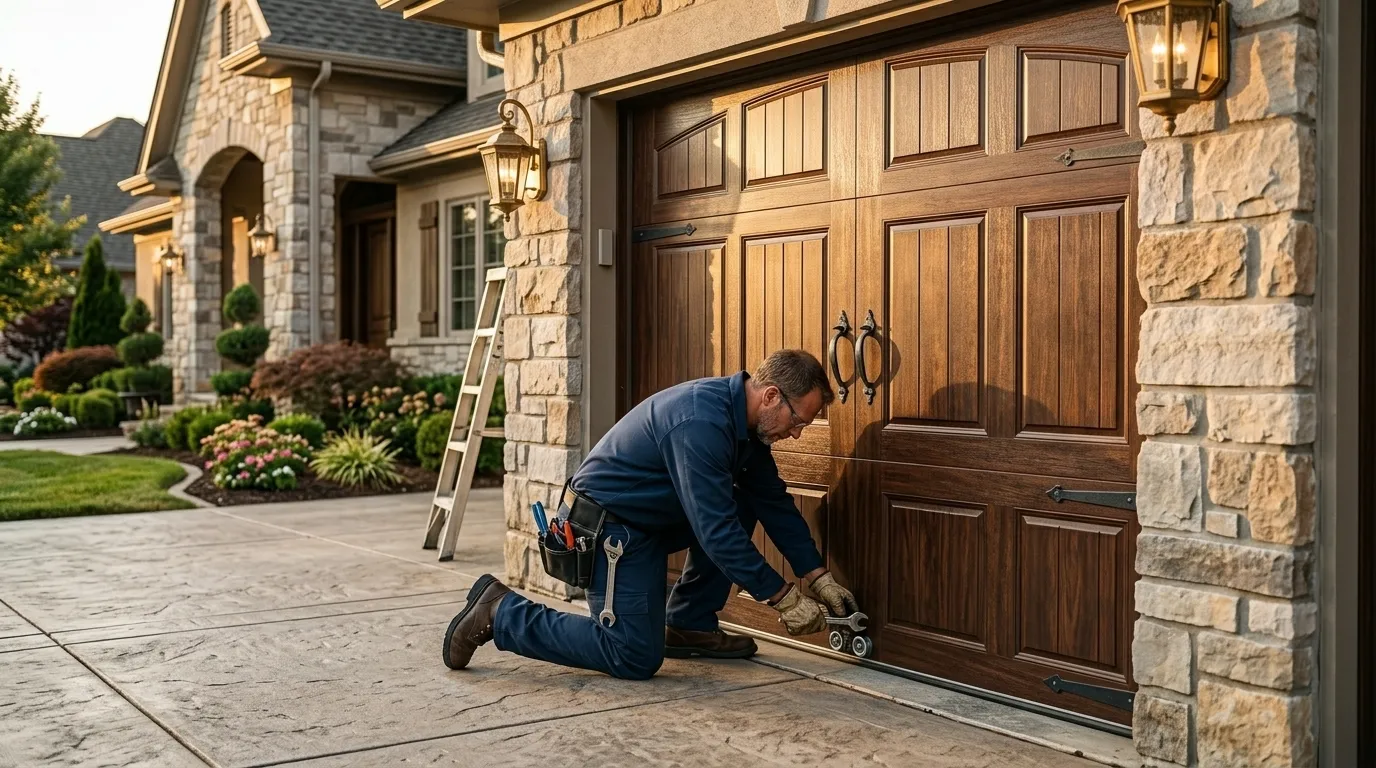
Mount Juliet's housing stock is younger than most of what we see closer to Nashville. The median year built here is 2005, which puts a big share of the doors we get called out to under 20 years old - not the worn-out, decades-old torsion springs and dry-rotted panels we see in older parts of the metro. That changes what actually goes wrong. It's less "this door is ancient" and more "a factory part failed early" or "the opener logic board glitched" or "a roller wore out faster than it should have because the door gets used twice a day by two working adults." You'll notice the door slow down before it stops, or the opener will run but the door won't lift, or you'll hear a single loud pop followed by a door that won't budge - that's a spring. On a newer door that pop usually means one spring gave out, not both, which matters for what we quote you. The other common one: the door reverses right before it touches the floor. That's almost always the safety sensors, not the door itself.
A misaligned photo-eye sensor is genuinely a DIY fix - wipe the lenses, make sure nothing's nudged them out of line, and check the wire hasn't been chewed or pinched. Openers respond to a factory reset most people can do themselves too, and it's worth trying before you call anyone. What isn't a DIY job is anything involving the torsion spring itself. That spring is wound under enough tension to break bones, and on a door built in the last 20 years it's sized for that specific door's weight - grab the wrong gauge spring off a shelf and you either strain the opener or leave the door dangerously off-balance. If your door drops fast when you pull the release cord, or the spring itself looks stretched or uneven side to side, that's a call, not a project.
The trap in a newer neighborhood is assuming "newer" means "simple." It doesn't always. Homes built in the 2000s often came with proprietary opener logic boards or matched-set springs from the original builder's supplier, and those parts aren't always the same ones sitting on a generic truck stock list. We've seen techs show up, quote a universal part, and have it not fit right or not talk to the opener's safety circuit correctly. The other place it goes wrong is skipping the actual diagnosis - a door that won't close might be the sensor, the limit switch, or a spring that's a hair off balance putting extra load on the motor. Treating the symptom instead of the cause means you pay twice.
We come out from Nashville, about 16 miles from Mount Juliet, so we're not sitting on your street with a standing crew. Most single-spring or sensor jobs run under two hours once we're on site and have parts in hand. A full opener swap or a two-spring replacement on a heavier insulated door takes longer, closer to half a day counting the trip and the tear-down. We don't promise a same-day window here - we'll give you a real appointment time and stick to it, but we're not a Mount Juliet-based crew that can swing by in twenty minutes.
Our truck carries the torsion spring sizes and roller types that cover most doors built in the last two decades, along with standard photo-eye sensors and universal opener logic boards for the major brands. Where we run into a wait is a proprietary builder-grade panel or a discontinued opener model - those sometimes need to be special-ordered, and we'll tell you upfront if that's the case rather than guess. Given the median income here sits well above the wider service area's $93,223, at $107,847, we also see more owners opting for insulated steel doors and belt-drive openers when they replace rather than repair, and we stock those parts too.
First we look at the whole door, not just the part that quit - spring balance, track alignment, cable wear, sensor position. On a door built in the newer Mount Juliet range, if one spring failed we usually check the second one's cycle count and tension before deciding whether to replace just the one or both, since a mismatched pair throws the door off balance again within a year. If it's an opener issue, we test the logic board and the sensors separately before swapping the whole unit - a $40 sensor beats a $300 opener every time it's actually the sensor. Once the repair's done we run the door through a full cycle test, check balance by hand, and make sure the safety reverse actually stops the door before it's under your car.
Most houses here were built after 2000, median year 2005, so the door itself isn't old - but factory parts still wear out or fail early, especially opener boards, sensors, and rollers. Newer doesn't mean maintenance-free, it just means different failure points than a decades-old door.
No, we run out of Nashville, about 16 miles away. We schedule real appointment windows rather than promising an instant response, since we're driving out rather than sitting on standby in town.
Sometimes, if the second spring is newer and balanced with the first. On a door from this era we check the second spring's wear before deciding - replacing both keeps them cycling evenly, but if the door was installed recently, single-spring replacement is often reasonable.
Usually not - we stock logic boards and sensors for the major brands common in homes built over the last 20 years. Builder-installed proprietary openers or older discontinued models sometimes require a special order, and we'll tell you before we start the job.
Call now or request a free quote - same-day service on most repairs, upfront written pricing.