Nashville, TN · Garage Door Service
Mount Juliet's houses mostly went up around 2005, which means most openers failing now are the original builder-grade units. We install replacements from our Nashville shop.
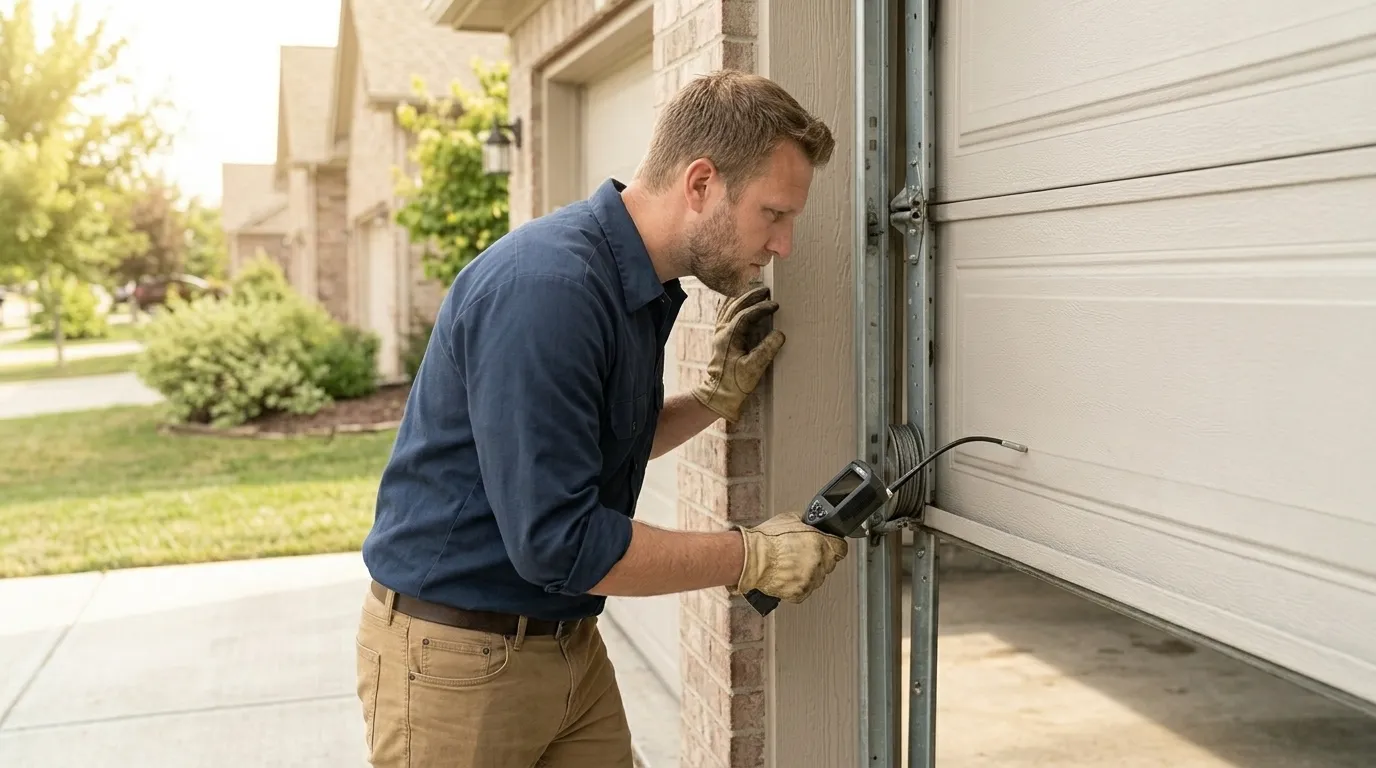
The call we get from Mount Juliet is almost always the same shape: the opener runs but the door won't fully close, or it closes and reverses for no reason, or the remote works some days and not others. Homeowners assume it's the sensors. Sometimes it is. More often it's a circuit board that's simply worn out its years of service.
Here's why that pattern shows up so consistently in this town and not identically everywhere we go. Most of the housing stock in Mount Juliet went up around 2005 - noticeably newer than the median across the broader area we cover, which runs closer to 1990. That means the openers failing on you right now aren't decades-old relics with obsolete parts. They're the original half-horsepower, builder-grade units the developer put in when the house was framed, now fifteen to twenty years into a service life that was never rated for twenty years. The housing is newer. The openers inside it are aging out on the same clock as everywhere else, just starting from a later date.
A lot of these openers look like a straightforward swap: unbolt the old head unit, bolt up a new one, plug it in. For a single, unencumbered garage with a standard 7-foot door, that's often true, and we're not going to tell you otherwise.
Where it stops being a weekend project is the safety wiring - the reversing sensor alignment, the wall control interlock, and on newer builds, sometimes a battery backup circuit that has to be commissioned correctly or the unit won't pass its own self-test. Get the sensor height or angle even slightly off and the door will close on a hazard it should have stopped for. If you're comfortable with a torque wrench and reading a wiring diagram, the mechanical part isn't beyond you. The safety commissioning is where we see the most botched DIY jobs, and it's the part that matters most.
The header above the door is the usual trap. Builder-grade construction from the 2005-era wave sometimes used lighter framing above the opening than what a heavier belt-drive unit wants to hang from. Swap in a beefier opener without checking, and you get flex, noise, or a bracket pulling loose six months later.
The other spot: the wall control. A lot of these houses still have the original single-button wall switch wired straight to the old unit. New openers increasingly want a multi-function control with its own low-voltage wiring standard, and matching that up to whatever's already run through the wall isn't always a drop-in fit.
Honest limitation: if your header framing needs reinforcement to carry a heavier unit, that's carpentry, not opener work, and we'll tell you before we start rather than force a install that won't hold.
A straight swap - same mounting points, same door, no header work - usually runs under two hours once we're on site. Add a battery backup unit, a new wall control with rewiring, or a header reinforcement, and you're looking at closer to half a day.
We're coming from Nashville, roughly 16 miles out to Mount Juliet, so factor that into the front end of your appointment window - not the job itself, just the drive.
We keep chain-drive and belt-drive openers on the truck along with the wall controls and sensor kits that fit most of what's currently installed in homes this age. Belt-drive units run quieter, which matters more in Mount Juliet than it might elsewhere: household income here runs well above the broader service area's median of $93,223, and we see more requests for the quieter, battery-backed units that cost more up front but don't wake anyone up at 6 a.m.
Cold, moderate winters are part of why we lean toward openers with sealed circuit boards and battery backup as standard offerings rather than upgrades you have to ask for - a board that's been through a few winters of temperature swings is the one most likely to start acting erratic, which loops back to the symptom that got you looking at this page in the first place.
We start by testing the existing unit rather than assuming it's dead - sometimes it's the sensor wiring, not the head unit, and there's no reason to replace a motor that's fine. If the opener itself is the problem, we pull the old unit, check the header framing can carry what we're hanging, and install the new opener with sensor alignment and wall control wired and tested before we call the job done.
We don't leave a self-test failure unresolved and call it finished. If the framing needs reinforcement first, we say so and give you the choice before any work starts, not after.
On homes built around the mid-2000s, this is usually a misaligned or dirtied safety sensor, or a circuit board that's aging out after fifteen-plus years of use. We test both before replacing anything, since the fix is often a $30 sensor bracket, not a whole new unit.
Sometimes. Builder-grade framing from this era doesn't always carry a heavier belt-drive unit without reinforcement. We check the header before we install and tell you upfront if bracing is needed - we won't hang a unit that isn't going to hold.
Yes, along with standard chain and belt-drive units. Given the cold winters this area gets, a battery backup matters more here than in milder climates - it's what keeps your door working through a power outage during a winter storm.
About 16 miles from our Nashville location. That's built into your appointment window, not into the job time itself - the install and testing take the same amount of time regardless of the drive.
Call now or request a free quote - same-day service on most repairs, upfront written pricing.