Nashville, TN · Garage Door Service
Forest Hills homes mostly went up around 1970, a different era than the 1990 median across our service area. Here's what that means for your door and spring setup.
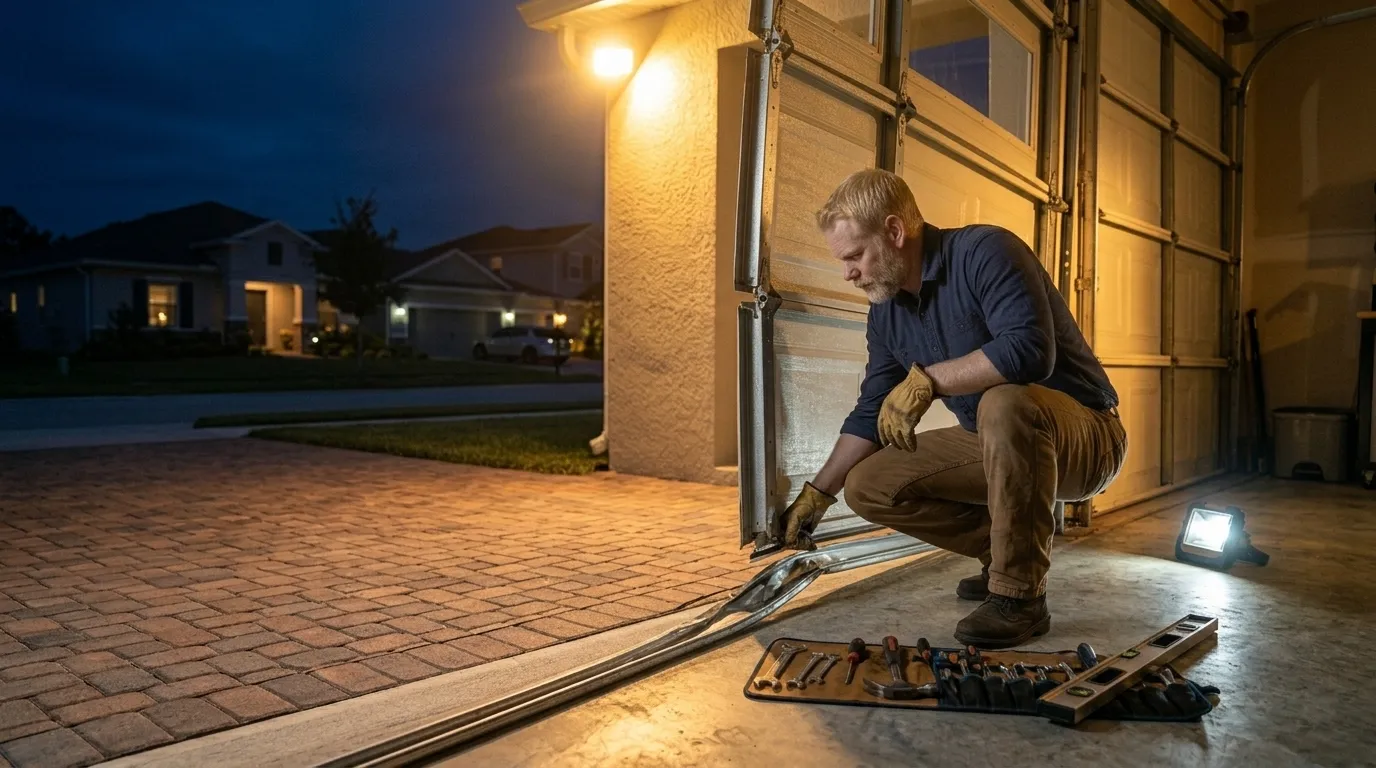
Forest Hills sits about 7 miles from Nashville, and we run trucks out that way as part of our normal coverage - this isn't a satellite office, it's a drive we make regularly. Because Forest Hills is close in but distinct from the rest of the service area, jobs here don't always look like jobs closer to the center of town. We don't keep a depot in Forest Hills, so if you're calling for something urgent, ask when the truck can actually get there rather than assuming same-hour arrival. What we can tell you with confidence is what kind of door and hardware you're likely dealing with once we're on site, because the housing stock here has a different profile than the broader area we cover.
Across the full service area, the median house was built around 1990, with construction spread from 1953 clear through 2012. Forest Hills doesn't track that curve. The median year built here is 1970, a full two decades earlier than the area-wide number. That's not a small gap - it's the difference between a door and opener system designed for a 1970s garage opening and the wider, taller openings and heavier-duty torsion setups that became standard in the 1990s and after. If your neighbor two towns over just replaced a door, don't assume the same parts fit yours.
With about 1,818 households in Forest Hills and a median household income around $250,001, this is a smaller, higher-income pocket than the roughly 55,524 households across the wider area, where median income runs closer to $93,223. That combination shows up in the garage doors we see here: original doors that have been well maintained rather than replaced out of necessity, insulated panels added later, and openers upgraded ahead of failure rather than after it. It also means when something does fail - a spring, a bent track, a worn cable - homeowners here are more likely to want it done right the first time than patched cheap.
A door built around 1970 usually means a single torsion spring on a lighter steel section, sometimes still on the original track hardware, and an opener that's been replaced once or twice since the door itself went in. That's a different repair than a door from a 1995 build, which tends to run heavier springs, wider rollers, and photo-eye safety sensors as standard. Nashville's cold-moderate winters put steady stress on any spring regardless of age, but an older torsion setup with decades of cycles on it is closer to the end of its service life than one installed in the 1990s. We'll tell you straight if a repair is worth doing on an older door or if the smarter move is a full replacement - patching a 50-year-old spring assembly isn't always the cheaper path once you count the callbacks.
Yes. We travel out from Nashville, about 7 miles, as part of our normal coverage - we don't keep a separate depot in Forest Hills, but it's a regular stop for our trucks.
Forest Hills homes have a median build year around 1970, two decades earlier than the roughly 1990 median across our wider service area. Older doors often run lighter torsion springs and older track hardware, which changes what parts fit and what a repair actually involves.
We carry common spring and cable sizes, but a door from 1970 can have hardware that's harder to source than newer stock. If a part needs to be special-ordered, we'll tell you the lead time before we start, rather than after.
It depends on the door's condition, not just its age. A well-maintained 1970s door can often be repaired. If the track, springs, and panel are all near the end of their life at once, replacement tends to save money over several separate repair calls.
Call now or request a free quote - same-day service on most repairs, upfront written pricing.