Nashville, TN · Garage Door Service
Nashville homes built 1953-2012 need door installs sized for real spans, not stock kits; here's what installation costs and why DIY often fails on older doors.
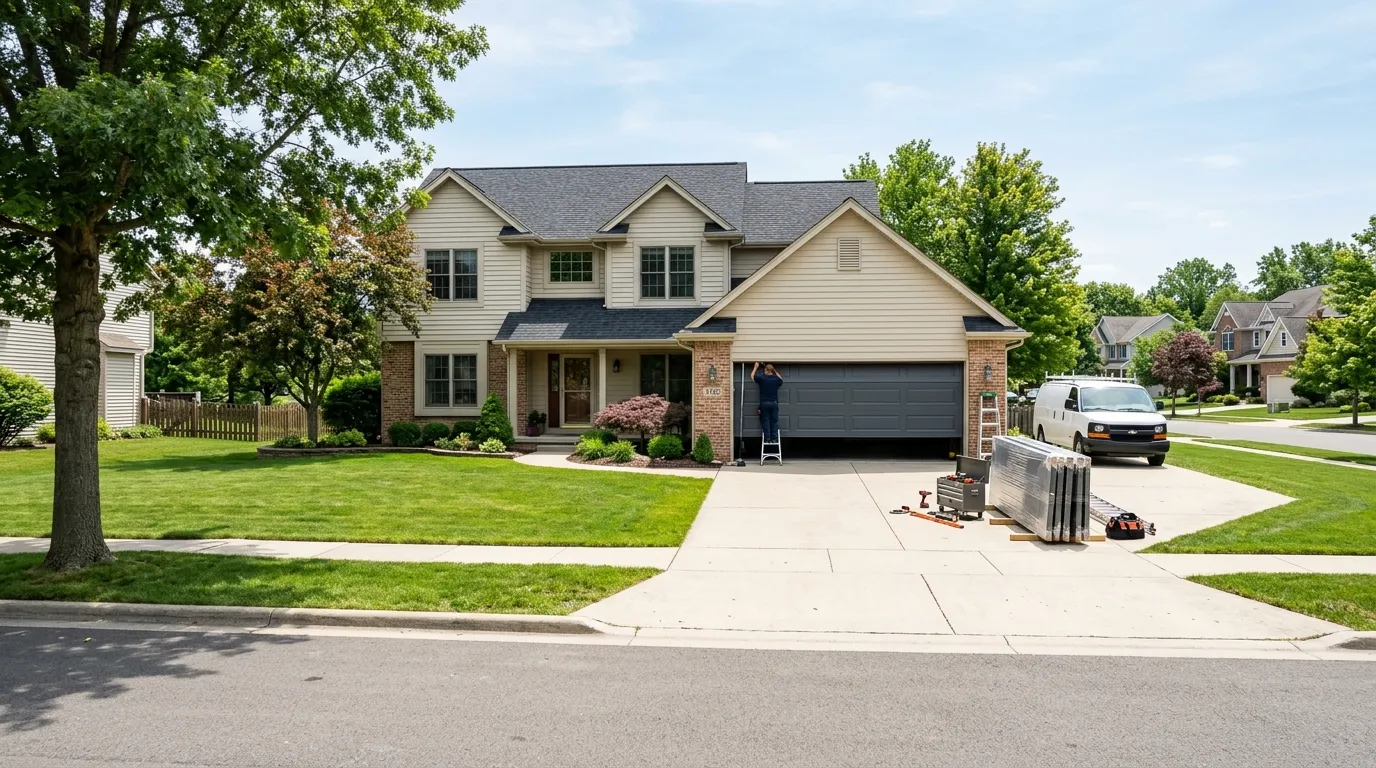
Most calls start the same way: a door that used to open fine now grinds, sags on one side, or won't seat flush against the slab. In Nashville that's rarely random. Housing across the service area was built between 1953 and 2012, with the bulk of it going up in the 1980s and 90s across the fourteen named areas we cover, from close-in spots like Belle Meade and Oak Hill out to farther towns like Mount Juliet and Kingston Springs. A lot of those openings were framed for the single-layer steel doors sold at the time, on springs and track sized for that door's weight - not for the heavier insulated doors homeowners replace them with today. When someone swaps in a thicker door without changing the spring wire or track radius, the opener strains, the rollers wear fast, and the door starts binding within a season or two. That's the symptom we get called about most: not a broken part yet, just a door that fights you every time, on a house old enough that the original hardware was never spec'd for what's hanging on it now.
We don't post a flat number here because the honest answer depends on what's actually on the house. A straight swap - same size opening, same door weight class, existing track still square - costs less than a job where the jamb needs rebuilding or the spring system has to be upsized for a heavier insulated door. Homes from the 1980s and 90s stock common across this area often need at least new track and spring rating even when the opener itself is fine, because the original hardware was matched to a lighter door. Median household income across the service area runs around $93,223, which is part of why insulated doors with better cold-weather seals are a common upgrade request here rather than an afterthought. Ask for a walk-through quote before you commit to anything - a real number requires someone looking at your actual opening, spring count, and track condition, not a phone estimate.
A torsion spring on a standard door is wound to hold a couple hundred pounds of tension. Get the winding bars wrong, or use the wrong wrench, and it can take a hand off or put someone through drywall. That's the part of this job we tell people flatly not to attempt themselves, no matter how the online videos make it look. Where DIY is more reasonable: swapping worn rollers, adjusting travel limits on the opener, or replacing weatherstripping. Where it isn't: spring replacement, track realignment on a door that's already sagging, or anything involving the cable drum. If your house is on the older end of the 1953-2012 range and the door hasn't been touched since it was built, assume the hardware underneath is original and plan for a real install, not a weekend fix.
Nashville sits in a cold-moderate climate band - not brutal, but enough freeze-thaw cycling each winter to matter for a door that wasn't built with a cold climate in mind. Combine that with housing stock where a large share of doors and openers date back to original 1980s-90s construction, and you get a specific failure pattern: seals that cracked and hardened years ago, steel panels that contracted just enough to throw the door out of square, and springs rated for a lighter door than what eventually got installed in the opening. Across the roughly 36,280 owner-occupied houses in the service area's 55,524 households, this is the pattern we see whether the address is close to Belle Meade or out toward Greenbrier - the fault isn't the brand of door, it's a mismatch between what the opening was built for decades ago and what's hanging in it now. A proper install accounts for both: the door's weight and the seal's tolerance for a Tennessee winter, not just whatever fits the frame.
If the track is bent, the panels are visibly out of square, or the spring has failed on a door that's original to a house built decades ago, repair usually just delays a bigger job. A door that's fighting the opener on every cycle, not just occasionally, is telling you the hardware underneath doesn't match the door anymore.
Sometimes, but not always. Insulated doors weigh more than the single-layer steel doors common in older Nashville-area construction, so the spring and sometimes the opener's lift capacity need to be checked before the new door goes in. This is exactly the kind of thing a walk-through catches before install day.
We'd tell you not to. A torsion spring holds enough tension to cause serious injury if the winding bars slip or the wrong tool is used. Roller and weatherstrip swaps are reasonable DIY jobs; spring and cable work isn't.
Call now or request a free quote - same-day service on most repairs, upfront written pricing.