Nashville, TN · Garage Door Service
Garage door repair and service for Nashville homes built between 1953 and 2012, where original torsion springs and openers are reaching the end of their run.
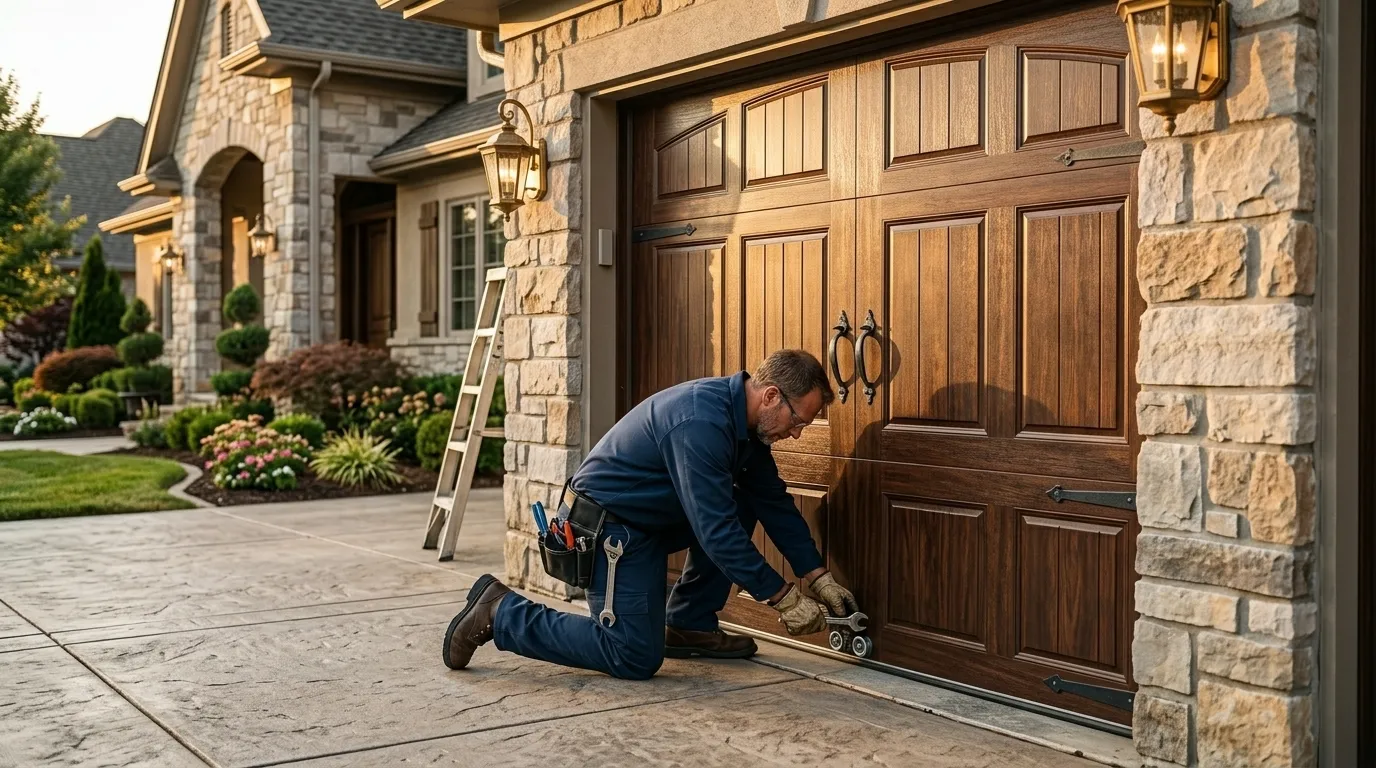
The call usually starts the same way: the door hesitates before it opens, or it opens on one side and hangs on the other, or the opener runs but the door doesn't move at all. Sometimes it's a bang from the spring side of the header, followed by a door that won't budge without help. These aren't random. Nashville's housing runs from 1953 through 2012, with the median home dating to 1990, which means a large share of the doors we get called on are running original or first-replacement hardware from that build era. Torsion springs are rated for a cycle count, not a calendar date, but most owners don't track cycles - they just notice the door getting heavier and louder every winter until one morning it doesn't lift at all. Openers from the 1990s wave are also hitting the point where the drive gear strips or the logic board stops taking a signal reliably. If your door is groaning, drifting off-track, or the opener clicks and does nothing, that's the spring or the drive train telling you it's near the end, not a one-time glitch.
We don't quote a repair over the phone, and we won't pretend we can. A stripped opener gear costs a fraction of a broken torsion spring on a double door, and a bent track from a car bump is a different job than a cable that's frayed through. What we can tell you is that the households we work with across this area - 55,524 of them, with 36,280 owner-occupied houses carrying this kind of hardware - have a median income of $93,223, and most of them want one number after a look at the door, not a range before we've seen it. So the honest answer is: we inspect first, then quote, then do the work if you say go. If a tech tells you a price sight-unseen for a spring or opener job, that's a guess dressed up as a quote.
Some of this is fair game to handle yourself. Lubricating rollers and hinges, tightening loose lag bolts on the track brackets, checking the photo-eye sensors for dust or misalignment - all reasonable weekend work, and it can buy an aging system real time. What isn't reasonable is touching a torsion spring. That spring is wound under enough tension to break a hand or worse, and the winding bars and clamps that make it safe aren't something most garages have lying around. Same goes for cable replacement on a door that's still under spring tension - it looks like a two-bolt job until the door drops. If your opener is from the original build era and it's throwing error codes, swapping the logic board yourself usually just delays a call you were going to make anyway, and sometimes voids what's left of a manufacturer part warranty. Know the line: parts that move with your effort are yours to try. Parts that store energy against a spring are not.
Three things line up against garage door hardware in this area, and they're specific to here, not universal. First, the housing itself: build years running 1953 to 2012 with a median around 1990 mean a huge share of doors and openers are past the point most manufacturers design for, and it's concentrated - most of the stock across the fourteen named communities in this service area, from Belle Meade six miles out to Kingston Springs nineteen miles out, dates to the 1980s and 90s specifically. Second, the climate band here is cold-moderate, which means torsion springs and steel tracks go through a real seasonal contraction-and-expansion cycle every year, not the flat, mild swing some markets get. That cycle fatigues metal faster than a warm-climate install of the same age. Third, volume: 36,280 owner-occupied houses in this area means a lot of doors built in the same narrow window are aging out at close to the same time, which is why spring failures cluster in the cold months here rather than spreading evenly across the year.
Cold-moderate winters put torsion springs through a real contraction cycle, and steel that's already near the end of its rated life fatigues faster under that stress. If your home dates from the 1980s-90s wave common across this area, winter is often when a spring that's been wearing quietly finally lets go.
We'd tell you not to. A wound torsion spring holds enough stored energy to cause serious injury without the right winding bars and clamps. Lubrication, bolt tightening, and sensor cleaning are fine DIY tasks - spring and cable work under tension isn't.
It depends on the specific fault, which is why we inspect before quoting. An opener from the original 1980s-90s build wave with a stripped gear or failing board is often past the point where a repair makes sense, but we won't know until we've looked at yours.
No. A spring job and an opener job cost different amounts, and guessing without seeing the door helps nobody. We look at the actual fault first, then give you one number before any work starts.
Call now or request a free quote - same-day service on most repairs, upfront written pricing.