Nashville, TN · Garage Door Service
Serving La Vergne from Nashville, 16 miles out. Doors here mostly date to the late 1990s and 2000s, not the older stock common closer to the city.
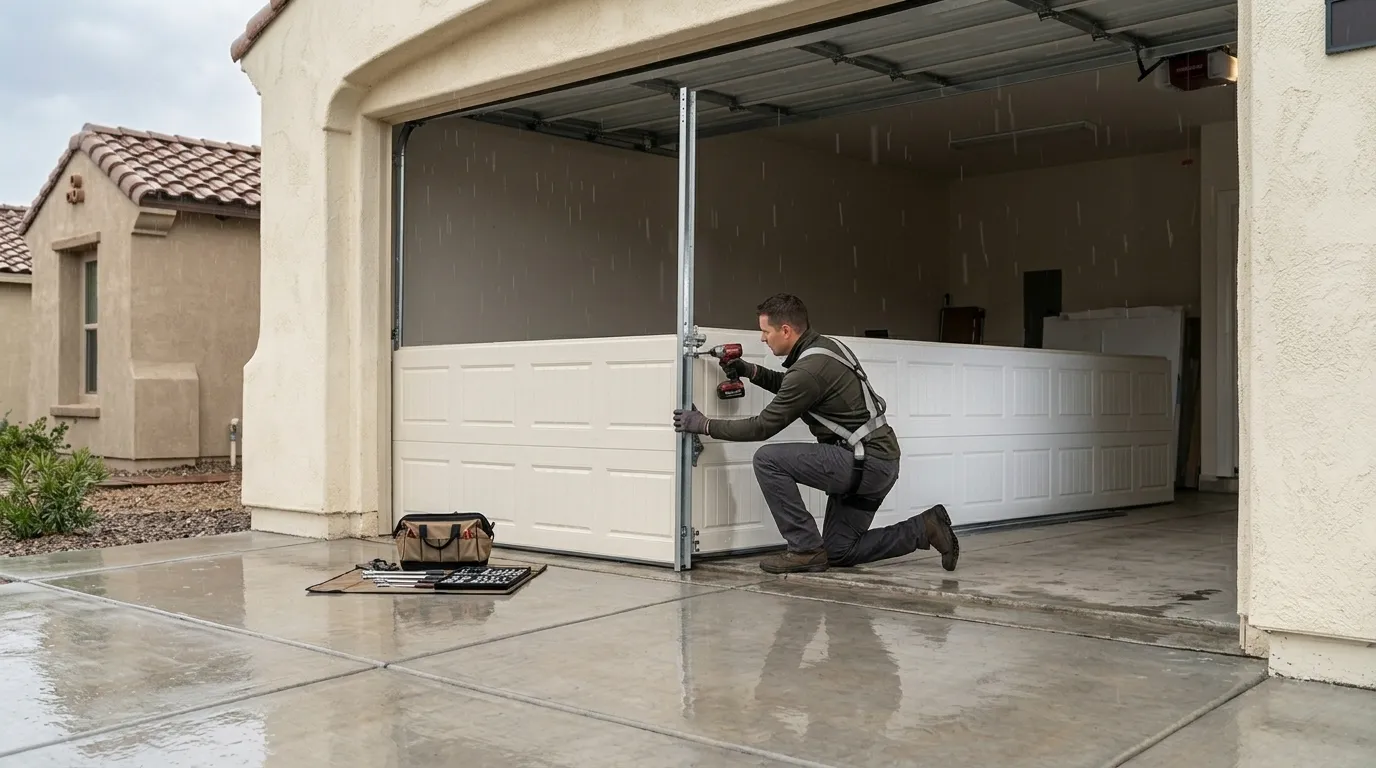
We run out to La Vergne from Nashville, about 16 miles each way, so we build the truck's route around the rest of the day's calls rather than treating it as a stop we pass on the way to somewhere else. That's not a knock on the area - it's just the honest layout of how the schedule works when the shop isn't sitting in La Vergne itself. If you call and we're mid-job on the other side of the metro, we'll tell you straight instead of guessing at a time. The upside is that La Vergne's newer housing tends to throw fewer surprise problems than older stock closer in, so once we're on-site the actual repair usually moves faster. We're not going to promise a same-day slot here, because we can't back that with a number we don't have. What we can say is that the drive doesn't change what we bring - same stock of springs, cables, and rollers whether the job is 6 miles out or 16.
This is where La Vergne actually looks different from the rest of the coverage area. Across the wider Nashville service territory the median house was built around 1990, with a lot of that 1980s-90s stock spread over fourteen named areas. La Vergne's own median build year lands around 2000 - a full decade newer. That gap matters for garage doors because it's roughly the line where torsion spring setups, extension springs with safety cables, and photo-eye sensors became standard instead of optional. A door installed in 1985 and a door installed in 2001 aren't running the same hardware generation, even if they look similar from the driveway. When we quote a repair here, we're not assuming the older parts that show up on a lot of the metro's calls. We're assuming newer, but not new - most of what we see is 15 to 25 years old now, old enough for openers to be failing and springs to be near the end of their cycle count, young enough that the doors themselves are usually still sound.
With around 12,880 households in La Vergne, the housing base is smaller than the metro-wide count of 55,524, but it's concentrated in that later build window rather than spread across decades. That means less variation in door width, track style, and opener mounting than you'd find in an older, patchwork neighborhood - most garages here were built to the same general code and layout expectations of the late 1990s and 2000s. Median household income in the area sits around $80,418, noticeably below the broader service-area median of $93,223, and that shows up in the kind of calls we get: more repair requests, fewer full-replacement jobs booked on a whim. We work with that. A repaired torsion spring or a replaced roller set on a door that's structurally fine costs a fraction of a new door, and for most of what we see here, that's the right call - we're not going to push a replacement when a repair holds up.
Doors from this build era usually run steel torsion springs on a center shaft rather than the older side-mounted setups, and most have opener safety reversal systems built in from the start rather than retrofitted. That's good news for repair costs - parts availability is better for newer hardware than for anything predating the 1993 federal photo-eye requirement. The climate here is cold-moderate, which means winter is the season we see the most spring failures and opener strain, since cold air stiffens lubricant and makes springs work harder to lift the same weight. If your door is sticking or the opener's straining more in January than July, that's not your imagination - it's the hardware doing more work in the cold. One limitation worth naming: if a spring or cable snaps, we carry common sizes on the truck, but a less common size sometimes means a short parts delay rather than a same-visit fix. We'd rather tell you that upfront than promise a fix we can't deliver that day.
About 16 miles. We factor that into scheduling rather than promising a fixed arrival window, since the exact time depends on where the truck is coming from that day.
Newer, on average. The area's median build year is around 2000, about a decade past the roughly 1990 median across the wider service territory, so torsion-spring and photo-eye hardware are the norm here rather than the exception.
We carry the common torsion spring sizes and roller types on the truck. If your door predates the standard local build era and uses an older or less common part, there can be a short delay while we source it.
The climate band for this area is cold-moderate, and cold temperatures stiffen spring lubricant and add resistance, so torsion springs work harder to lift the same door weight. That extra strain is what pushes older or worn springs to fail.
Call now or request a free quote - same-day service on most repairs, upfront written pricing.