Nashville, TN · Garage Door Service
Ridgetop homes mostly date to 1979, a decade before the Nashville-area median. We travel 16 miles out to fix the hardware that era actually used.
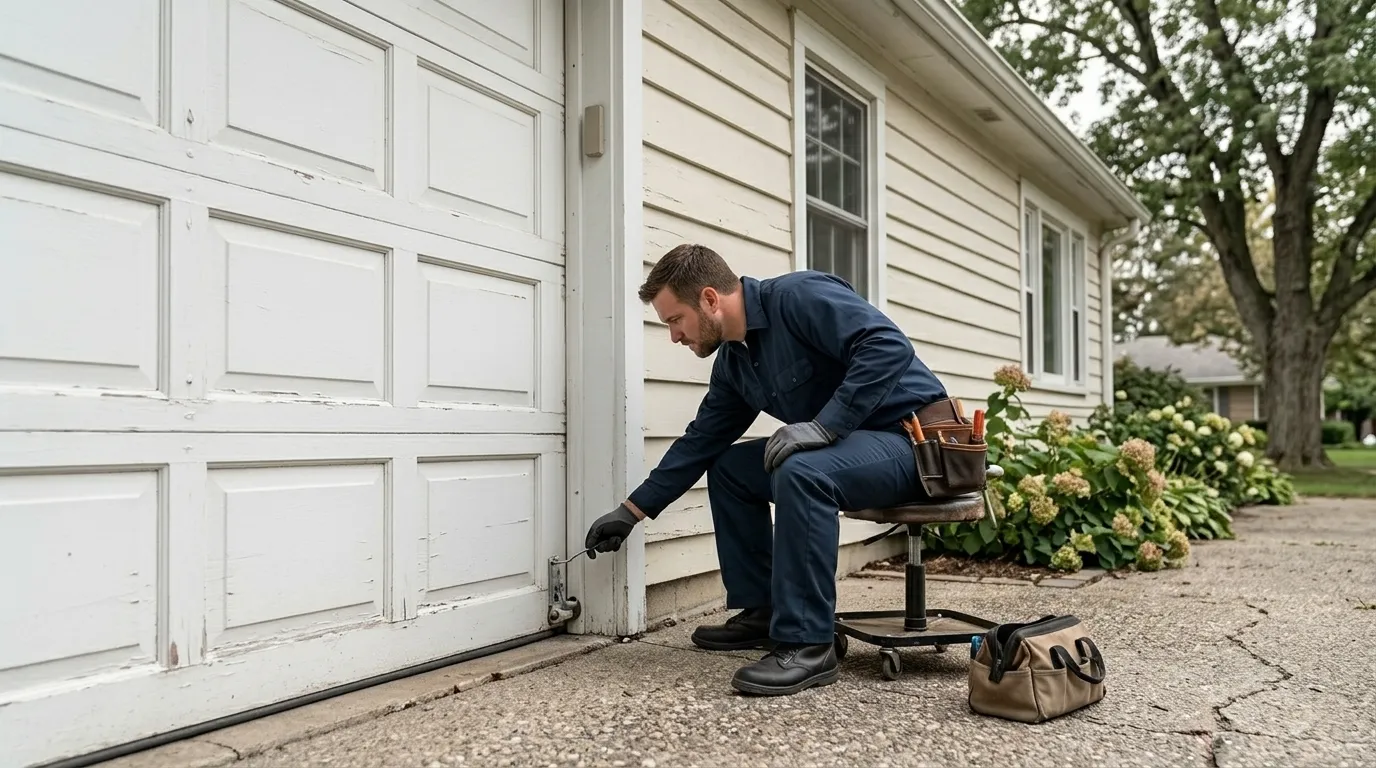
Ridgetop sits about 16 miles out from Nashville, and we schedule that drive into the route rather than treat it as an afterthought. We don't run a depot here - we come from Nashville, same as we do for the rest of the service area - so when you call, we're building the trip around your job, not showing up because a truck happened to be nearby. That matters more in Ridgetop than in some of the closer towns, because the distance means we plan parts before we leave, not after we diagnose on-site. If your opener is grinding or a cable's frayed, tell us what you're seeing on the phone so the truck rolls with the right springs and rollers already on it. We'd rather ask two extra questions up front than drive 16 miles twice.
The Nashville area overall has a median build year of 1990, spread across housing from 1953 up through 2012. Ridgetop doesn't track that. The median year built here is 1979, more than a decade ahead of the wider area's midpoint. That gap isn't trivia - it means the typical Ridgetop garage was built when torsion springs were sized differently, openers were chain-drive with far less safety circuitry, and steel panel gauges ran thinner than what's sold today. A repair call here is more likely to involve original 1970s hardware that's outlived several supposed replacements, not a five-year-old opener with a sensor glitch.
With 881 households in Ridgetop and a median income of $68,884, this is a smaller, tighter market than the Nashville median would suggest - fewer new builds pulling the average forward, more original construction still standing. That combination usually means doors and openers get run longer before anyone calls for a look, either because a homeowner doesn't want to spend on something still technically working, or because a smaller inventory of houses means fewer contractors have cycled through offering upgrades. We don't push replacement on a door that's still sound. If a 1979-era torsion spring is doing its job and the drums aren't pitted, we'll say so, even if it means a shorter invoice.
Cold-band winters in this region mean lubricant thickens and steel contracts, and that stress lands hardest on springs and hinges that are already 40-plus years old. On a 1979 build, we're checking for original torsion springs undersized for a heavier replacement door someone bolted on later, worn one-piece track brackets, and openers with no auto-reverse - a real safety gap on homes this age. We won't tell you a spring swap fixes a door whose track is bent past true; sometimes the honest call is that the opener's fine but the whole assembly needs replacing, and we'll say which one it is before we start charging for parts.
Yes. The wider service area's median build year is 1990, but Ridgetop's median is 1979 - over a decade older. That means original torsion hardware, thinner steel panels, and openers without modern safety reversing are more common here than the area average suggests.
No. We work out of Nashville and drive out to Ridgetop, about 16 miles each way, for every job. There's no local depot, so telling us the symptoms up front helps us bring the right parts on the first trip.
Depends on the track and panel condition, not just the spring's age. On a lot of 1970s-built Ridgetop garages the spring is the only worn part and a swap is enough. If the track's bent or the panels are rusted through, replacing just the spring is money wasted.
This area sits in a moderate-cold climate band, and older lubricant and steel hardware stiffen and contract more than newer components are designed to handle. On a door built before modern openers had auto-reverse safety circuits, that added strain shows up as grinding, slow starts, or the door reversing unexpectedly.
Call now or request a free quote - same-day service on most repairs, upfront written pricing.